Auto Amazon Links: No products found. Blocked by captcha.
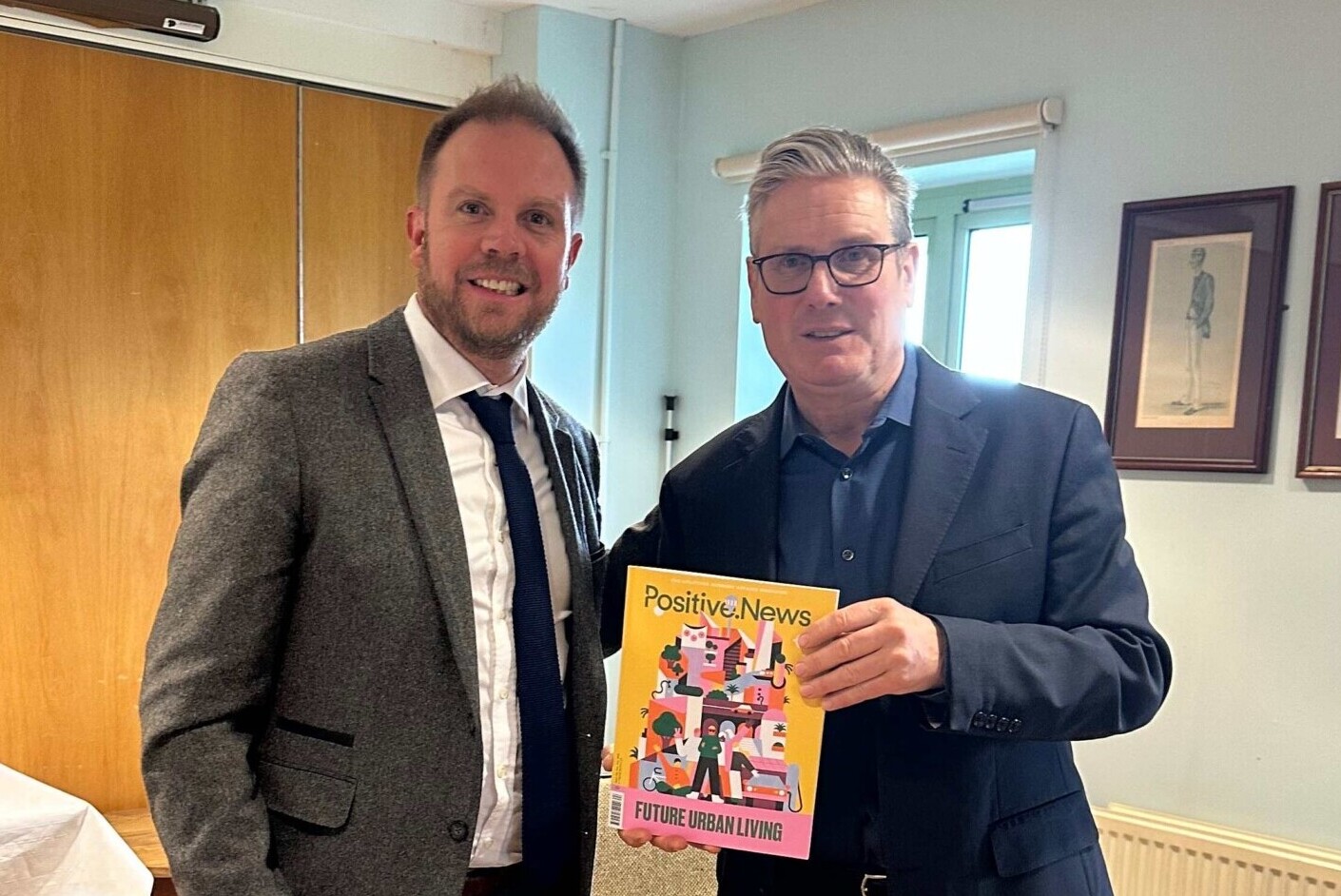
Tom Pattinson, editor of Positive News, recently met with Prime Minister Keir Starmer to explore the government’s new initiative, Pride in Place, which is aimed at revitalizing communities by investing in neighbourhood regeneration. Starmer highlighted the widespread challenges many towns face, such as shuttered shops and abandoned youth clubs, stressing the urgent need to empower local residents to take charge of improving their own areas.
Central to the Pride in Place programme is the establishment of Neighbourhood Boards. These boards comprise local residents, elected officials, business owners, and community leaders who work together to decide how funds should be allocated. Rather than a directive from central government, the programme is designed to be a community-driven partnership that embeds local voices into decision-making processes. Starmer emphasized the importance of local knowledge and ownership, stating, “The number of people that have said, ‘we’ve got skin in the game, we will know what’s best in our community.’” This approach reflects a belief that communities themselves are best placed to identify priorities such as playgrounds, high streets, or sports facilities.
The financial support provided by Pride in Place is substantial and structured to produce both short- and long-term impacts. Nearly 95 areas will benefit immediately from a £1.5 million Impact Fund to enhance visible community infrastructure like parks and public spaces. Over the next decade, an additional 244 neighbourhoods will be given up to £20 million each for more strategic renewal efforts. These funds are flexible and controlled locally, allowing communities to address their unique needs. Early success stories demonstrate the model’s potential: in Ramsgate, community members used £500,000 to secure ownership of the last youth centre, while in Elgin, Scotland, £1 million is funding a regional athletics hub designed by and for locals.
Despite optimism, Starmer acknowledges that reversing entrenched economic decline across the country remains a complex and slow challenge. He observed that economic growth has not been equally shared, saying, “It can’t just be in some places. I think it’s been a failure for too long that only certain parts of the country are seeing growth.” Concerns have also been raised about how Neighbourhood Boards will function in practice. For example, the Local Government Association stresses the need for clarity on the relationship between boards and councils and adequate capacity to manage funded projects. Councillor Pete Smith from Walsall warned of risks that such boards could become dominated by professionals rather than fully representing diverse community voices. Nonetheless, Starmer remains hopeful about the programme’s potential to unite communities and build pride, emphasizing that most people want to contribute positively regardless of their differences
Read the full article on Positive News here: Read More
Auto Amazon Links: No products found. Blocked by captcha.