Auto Amazon Links: No products found. Blocked by captcha.
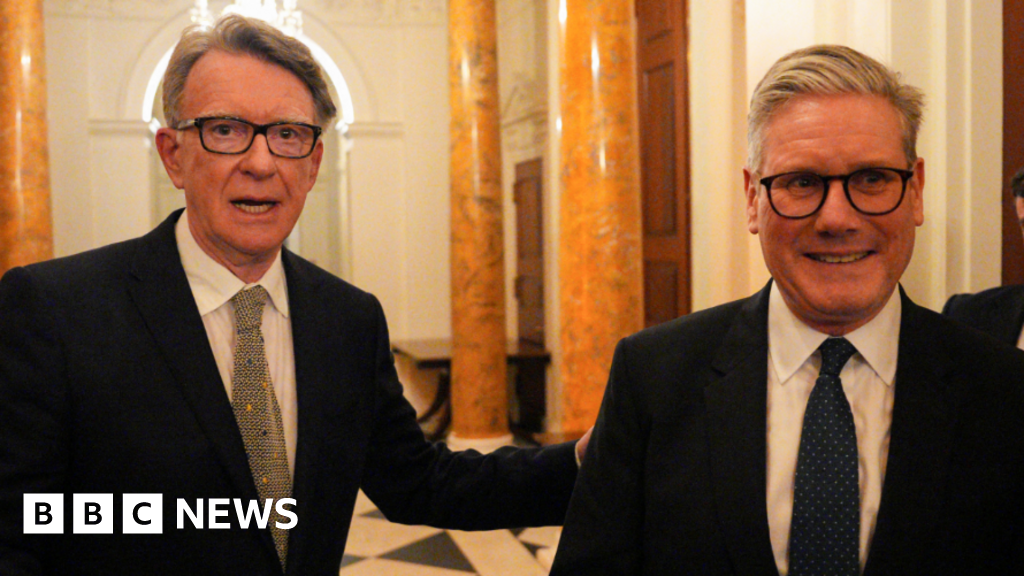
Parliamentarians have agreed to make public documents relating to Lord Mandelson’s appointment as the UK ambassador to the United States, a decision that came after significant opposition from Labour MPs toward the Prime Minister’s initial approach. Sir Keir Starmer maintained that any released information would not compromise national security or harm diplomatic relations. However, mounting pressure from senior Labour figures, including Angela Rayner, compelled the government to involve a cross-party parliamentary committee to oversee the disclosure process.
This demand for transparency intensified following a police inquiry into allegations that Lord Mandelson had passed sensitive government information to Jeffrey Epstein, a disgraced financier. Last year, the Prime Minister dismissed Lord Mandelson from his ambassadorial role after revelations about his relationship with Epstein surfaced, notably involving emails where Mandelson expressed support during Epstein’s 2008 conviction for soliciting prostitution from a minor. At Prime Minister’s Questions, Sir Keir acknowledged awareness of Mandelson’s ongoing association with Epstein when making the appointment.
A spokesperson from Downing Street accused Lord Mandelson of deceit, stating he “lied to the prime minister, hid information that has since come to light and presented Jeffrey Epstein as someone he barely knew.” The spokesperson confirmed the government’s commitment to publishing documents tied to Mandelson’s appointment to reveal these falsehoods. Opposition leader Kemi Badenoch criticized the government at PMQs, accusing it of attempting to “sabotage” the disclosures and claiming that concerns over national security were merely a cover to protect the Prime Minister’s job.
Following a heated debate in the House of Commons, members backed the proposal to release the documents without a vote. While Sir Keir agreed to disclose certain documents addressing the due diligence behind Mandelson’s hiring, some MPs expressed frustration that sensitive materials could be withheld under national security pretexts, interpreting this as a cover-up attempt. In response, the government conceded that any particularly sensitive content would be reviewed by the Intelligence and Security Committee of Parliament, a move welcomed by Labour MPs including Angela Rayner. The Cabinet Office minister, Chris Ward, indicated the government’s intention to publish the documents promptly, though discussions with the Metropolitan Police were necessary to determine what could be made public without jeopardizing the ongoing investigation.
London’s police force issued a statement during parliamentary debates, advising the government against releasing specific documents that could interfere with their inquiry. The strong reaction from Labour MPs appeared to take the government by surprise, eventually leading to the parliamentary committee’s involvement. One Labour MP summed up the feeling among colleagues by stating, “I don’t want to be part of a cover-up.” Veteran Labour MP Clive Efford described the debate as a reflection of widespread anger over Mandelson’s conduct, emphasizing that full disclosure was the only way forward. Efford further attributed the ambassadorial appointment to advice provided to Sir Keir, calling it a “really poor decision.” Labour MP Natalie Fleet stressed that Mandelson “needs the consequences of a police investigation” and noted that had the Prime Minister been aware of the extent of Mandelson’s Epstein connections, the appointment would not have occurred.
The Conservative motion aimed to increase pressure for transparency by demanding a broad release of material related to Mandelson’s communications, including emails and texts exchanged with ministers and Sir Keir’s chief of staff. The ongoing police investigation centers on allegations that Lord Mandelson engaged in misconduct in public office by sharing market-sensitive government information with Epstein during his tenure as a cabinet minister in Gordon Brown’s administration. Recently released emails from the US Department of Justice indicate Mandelson forwarded an internal Downing Street memo in 2009 concerning potential asset sales by the government.
Lord Mandelson has not publicly responded but is understood to deny any criminal wrongdoing or financial motivation. Additional correspondence suggests he gave Epstein prior warning about a significant €500 billion EU bailout designed to stabilize the Euro in 2010. Some emails also indicate Epstein made several payments totaling $75,000 to Mandelson between 2003 and 2004, though Mandelson claims no recollection or record of these transactions.
The peer has apologized for maintaining his friendship with Epstein after the latter’s conviction, stating he “believed lies he told me and so many others.” Recently, Mandelson resigned his Labour Party membership and retired from the House of Lords. The government is currently preparing legislation to formally strip him of his peerage. Sir Keir Starmer has also confirmed steps to remove Mandelson’s lifetime membership of the Privy Council, a position held as a former minister
Read the full article from The BBC here: Read More
Auto Amazon Links: No products found. Blocked by captcha.