Auto Amazon Links: No products found. Blocked by captcha.
Recent reports from National Highways have revealed that many smart motorways across England are not delivering the value for money originally anticipated. Among the sixteen projects assessed, only three are on track to meet their expected financial benefits. However, the majority have met safety targets as initially forecast. Two specific schemes—one on the M25 and another on the M6—were identified as offering particularly poor value.
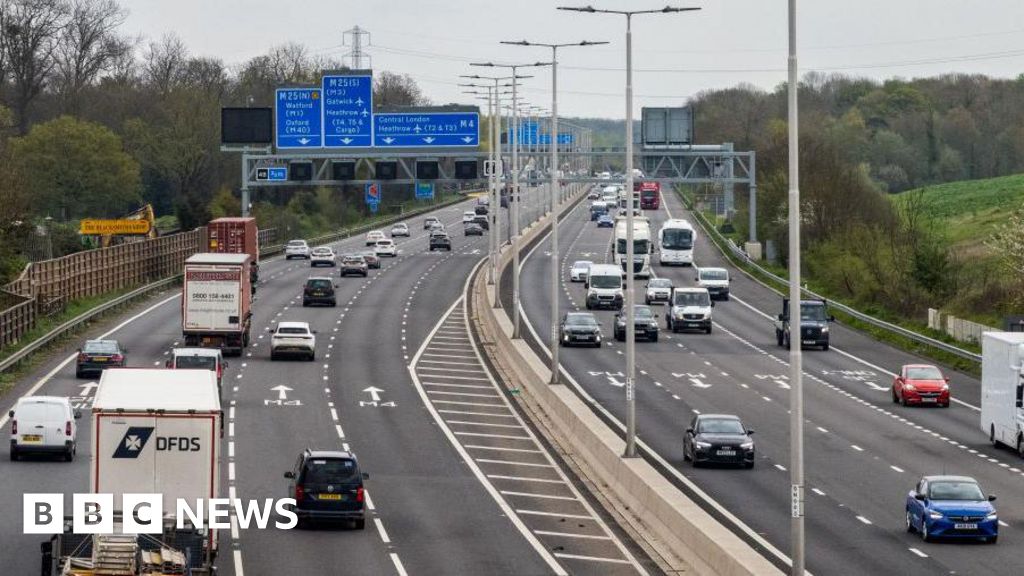
Smart motorways were introduced as a solution to reduce congestion by using technology to better manage traffic flow and increase capacity. The most straightforward variant, controlled motorways, maintain a traditional motorway layout but use overhead signs and variable speed limits. More contentious are the schemes that repurpose the hard shoulder: dynamic hard shoulder roads allow its use only during peak times, while all-lane-running motorways remove the hard shoulder permanently to create an additional live lane. Without a hard shoulder, drivers in trouble are directed toward refuge areas spaced regularly along the motorway, though stranded vehicles can still end up in live lanes, posing safety risks.
Edmund King, president of the AA, described the safety record of these motorways as mixed. He noted that while controlled motorways using technology have improved safety, other types have seen increases in serious injuries and fatalities. King criticized the schemes as a “failed experiment,” calling them “frightening” due to the danger faced by broken-down motorists who rely heavily on quick responses from other drivers when lanes are reportedly closed. The AA also condemned the projects as a “catastrophic waste of time, money and effort.”
National Highways conducts periodic evaluations measuring smart motorways against key goals, including safety, environmental benefits, congestion reduction, and journey time improvements. It stated that, in most cases, safety and environmental standards have been met, and noted that without these conversions, many motorways would struggle to handle current peak traffic volumes. The organization also pointed out that traffic growth has been slower than expected, meaning fewer drivers benefit from these upgrades, which contributes to the lower-than-anticipated return on investment. Noteworthy poor performers include a £180 million all-lane-running section of the M25 and a £118 million dynamic hard shoulder stretch of the M6, both criticized for disappointing improvements in journey times and overall value over their projected 60-year lifespan.
While National Highways highlighted that collision rates on many smart motorways are lower than on the conventional roads they replaced, the AA disputed the reliability of the data used in these evaluations, citing inconsistencies that challenge their conclusions. The AA also drew attention to increases in fatalities and serious accidents on sections of the M3 and M1, raising questions about the overall safety of smart motorways. In response, the Department for Transport reaffirmed that although no new smart motorways will be constructed, existing ones remain among the safest roads regarding deaths and serious injuries, matching or exceeding the safety levels of the roads they replaced. National Highways further cautioned that value-for-money assessments are based on decade-old projections and a limited timeframe relative to the projects’ expected lifespans. They maintained that smart motorways continue to provide vital extra capacity, reduce congestion, and help lower carbon emissions. In 2023, the government halted plans for building new smart motorways due to ongoing safety concerns
Read the full article from The BBC here: Read More
Auto Amazon Links: No products found. Blocked by captcha.