Auto Amazon Links: No products found. Blocked by captcha.
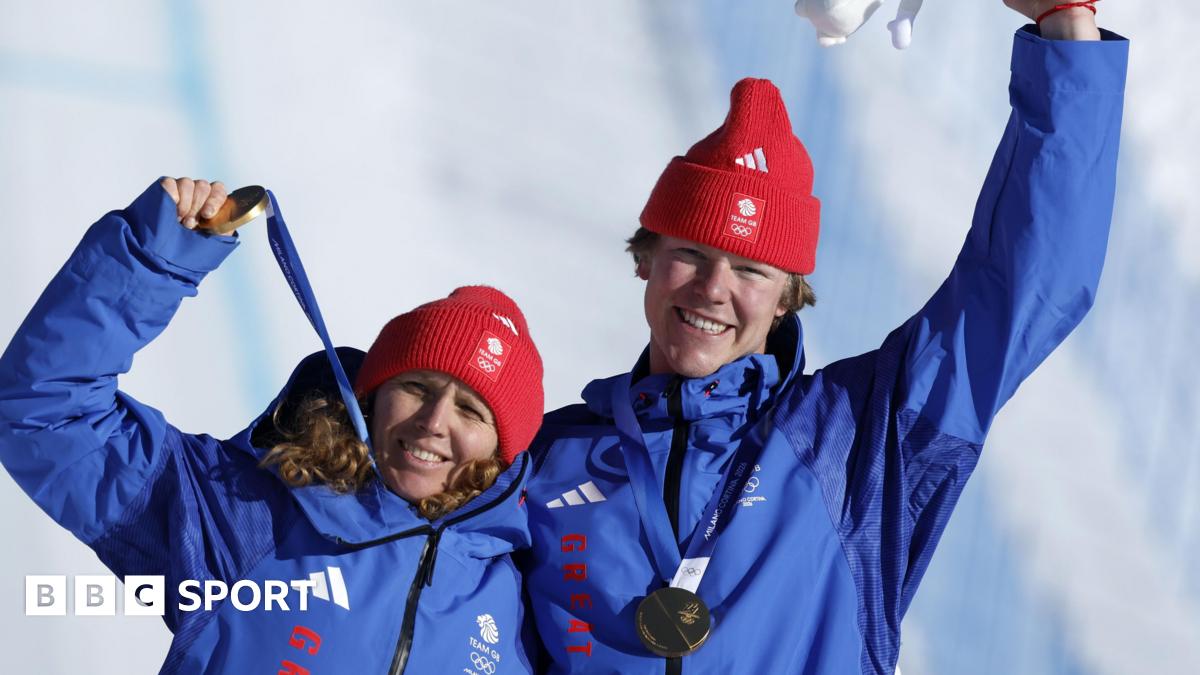
Team GB achieved a historic milestone at the Winter Olympics on Sunday, securing two gold medals in a single day for the first time. This was highlighted by Matt Weston and Tabitha Stoecker’s triumph in the mixed team skeleton event. Earlier that day, Charlotte Bankes and Huw Nightingale had already claimed victory in the snowboard cross mixed team competition, setting the stage for an extraordinary day of success for British athletes.
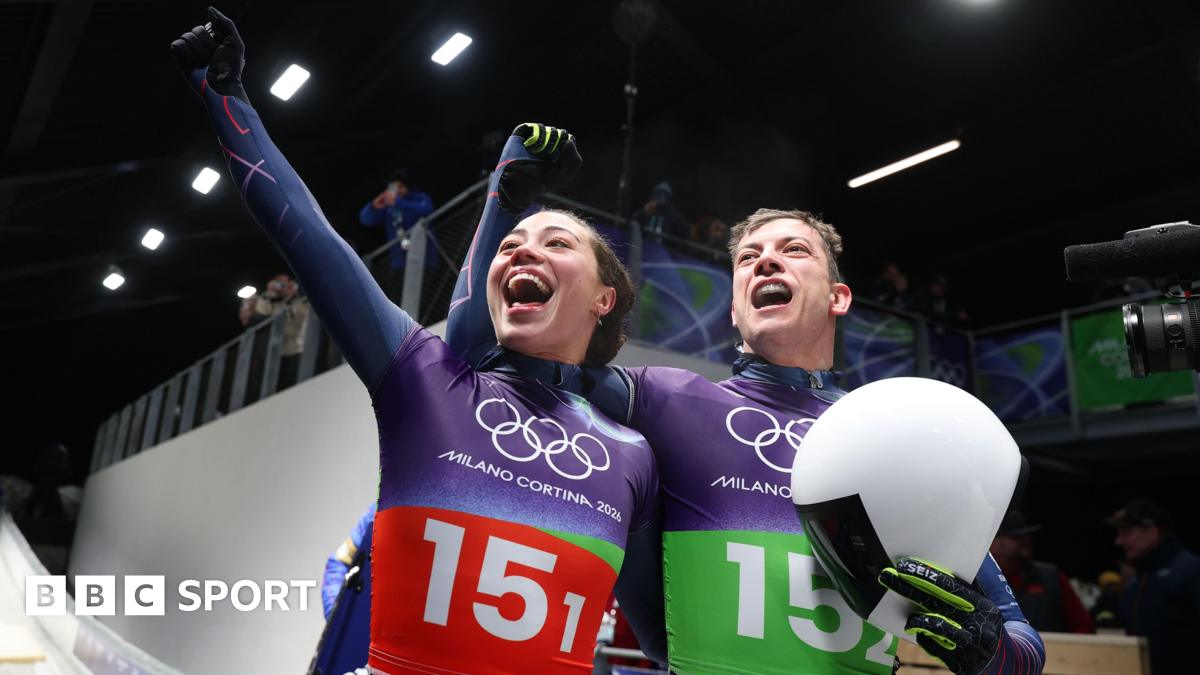
Weston’s performance was particularly remarkable as he made history in Cortina, becoming the first British athlete to win two gold medals at a single Winter Olympics. This accomplishment followed his individual skeleton gold just two days prior. Stoecker, 25 years old, had set a challenging pace with her run of 1:00.77, putting pressure on Weston to deliver. As the final duo to compete, the British pair was the top-seeded team. Weston, aged 28 and one of Team GB’s standout athletes, responded with a masterful 58.59-second run, bringing their combined time to 1:59.36 and securing the gold.
This victory also marked a historic first for Great Britain, as it was the first time the nation won three gold medals at a single Winter Olympics. Weston expressed his amazement at the team victory, noting, “The individual event is amazing but doing it as a team when we’re normally an individual sport is amazing. To have my team-mate by my side as Olympic champions, two-time for me which is crazy. I’m looking forward to the celebrations!” Meanwhile, a second British team, featuring Marcus Wyatt and Freya Tarbit, narrowly missed out on a podium finish by just 0.01 seconds. The silver and bronze went to the two German teams led by Christopher Grotheer and Axel Jungk, respectively.
Weston entered these Games with a clear goal of winning gold, and his dominance has now made him the most decorated British Winter Olympian ever. After a modest 15th place finish four years ago in Beijing, his rise has been extraordinary. Alongside his Olympic golds, he has secured three straight World Cup overall titles starting from 2024. John Jackson, a former bobsledder and 2014 Olympic bronze medallist, praised Weston’s performance, saying, “Weston has been the cream of the crop of anybody on this track. We are witnessing history right here. He just keeps raising the bar to new standards, and that was absolutely nail-biting stuff when Tabby didn’t quite have the run she wanted to give him a chance. Weston absolutely destroyed the field.”
The excitement of the competition grew throughout the day, culminating in Weston’s record-setting final runs. Having broken the track record in all four runs during the individual event, he once again delivered a flawless performance in the mixed team race. Reflecting on his mindset, Weston told BBC Sport, “Luckily I felt like I knew what I needed to do. It’s all a bit of a whirlwind, I took confidence from the individual event and in my head I had to be quite boring and just get the job done.”
Before this breakthrough day, Team GB had endured a week of near misses in Italy, with several fourth-place finishes frustrating the nation’s hopes. However, achieving two gold medals in one day—particularly with Bankes and Nightingale’s groundbreaking snowboard cross mixed team victory—significantly altered the narrative. While the snowboarding win was an unexpected boost, the skeleton golds represent a return to form for the British team on a track where they have a historically strong presence. After a disappointing 2022 Winter Games where they failed to earn any skeleton medals—a first since the sport’s reinstatement in 2002—this success is viewed as a restoration of their traditional strength.
Weston, as the favorite, dominated the men’s skeleton event on Friday with a substantial winning margin of 0.88 seconds, the second-largest in the sport’s Olympic history. Though the British women, including Stoecker, Tarbit, and Amelia Coltman, did not finish on the podium, all placed within the top 10 at their first Olympic Games. Wyatt, who placed ninth in the men’s event, reflected on the team’s progress: “Me and Matt were there in Beijing [2022] and it was good to come and prove that that was a blip and not a trend. What these medals will do for the future of this programme for the next four, eight, 12 years – we are going to be expecting more medals and keeping that rich history of British skeleton alive.
Read the full article from The BBC here: Read More
Auto Amazon Links: No products found. Blocked by captcha.