Auto Amazon Links: No products found. Blocked by captcha.
A newly discovered species of ancient crocodile has been named in honor of a teacher who profoundly inspired the scientist behind the research. Ewan Bodenham, a 29-year-old researcher, chose to commemorate his former physics teacher, David Rhys Jones from Cardigan, Ceredigion, by attributing his name to this prehistoric reptile.
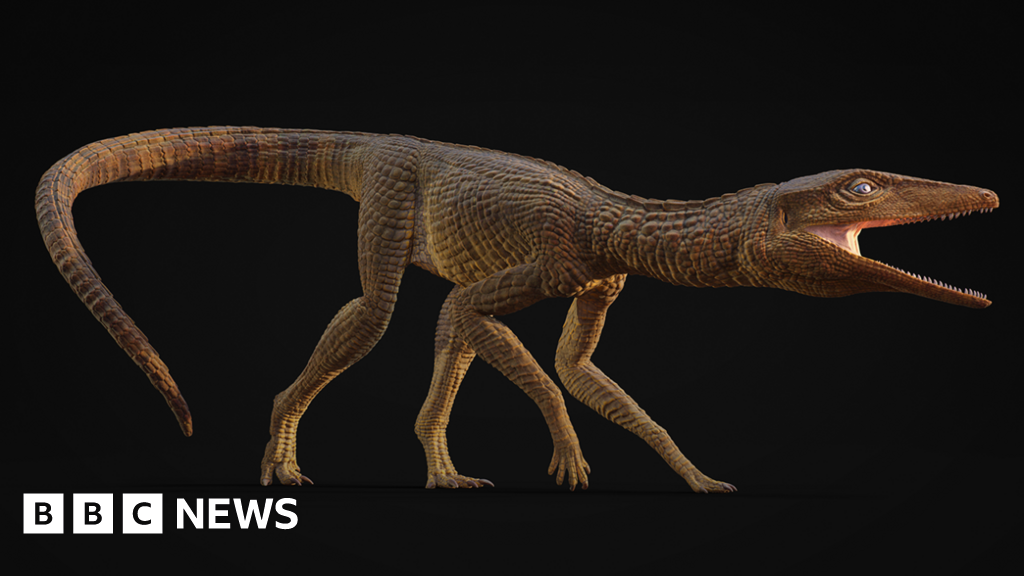
This crocodylomorph, which lived approximately 215 million years ago during the Triassic period, is believed to have been a swift, terrestrial predator often described as a “reptilian greyhound.” The species has been officially classified and given the Latin name *Galahadosuchus jonesi*. The initial part of the name references the Arthurian knight Galahad, symbolizing the animal’s upright posture, while the latter part pays tribute to Jones.
Bodenham, now pursuing a PhD at University College London and the Natural History Museum in London, initially planned to reveal this honor at a school assembly at Ysgol Uwchradd Aberteifi. However, the publication of his scientific paper occurred ahead of schedule, requiring him to share the news via video call. During the call, Bodenham expressed to Jones, “The first chapter of my thesis is naming a new species of fossil crocodile, and I’m naming it after you.” Jones responded with heartfelt appreciation, saying, “Good God, what an honour. What a privilege.” Their exchange included moments of humor and warmth, reflecting the profound impact the teacher had on Bodenham’s academic journey.
The fossil that led to this discovery was first found in Gloucestershire in 1969 but had remained unstudied in the collections of the Natural History Museum for many years. The geological layers where it was discovered span parts of south Wales and south-west England. Jones’s enthusiasm for science and his skill as a teacher were pivotal influences in Bodenham’s career, even though Bodenham followed a path in biology rather than physics. Bodenham described his former teacher as “such a good teacher” who not only conveyed knowledge effectively but also genuinely loved science and challenged his students to excel.
Bodenham remarked that naming the species after Jones was met with widespread positivity, including joy from Jones, the local community, and others close to Bodenham. Despite considering family members and his girlfriend for this recognition, none expressed any disappointment. Instead, the announcement has sparked a wave of admiration for Jones, who is regarded as a well-liked figure within his school and community.
Regarding the identification of the new species, Bodenham explained that his interest in crocodylomorphs began somewhat unexpectedly through a PhD project suggested by his supervisor. “It’s not like I’ve been obsessed with crocs from a young age or whatever; they’re just a good group for studying the types of questions I like to work on,” he said. His research involved comparing the newly studied specimen to *Terrestrisuchus*, another early terrestrial crocodylomorph known for its long legs and land-based lifestyle. After thorough anatomical comparisons, the team concluded that there were 13 significant differences justifying the designation of a new species.
This discovery adds valuable knowledge about the diversity of animal life that inhabited the region during the Late Triassic. It sheds light on fauna that existed before the Triassic–Jurassic mass extinction, an event triggered by intensified volcanic activity that significantly altered the climate. Through his work, Bodenham continues to uncover important clues about prehistoric ecosystems and the evolutionary history of early crocodiles
Read the full article from The BBC here: Read More
Auto Amazon Links: No products found. Blocked by captcha.