Auto Amazon Links: No products found. Blocked by captcha.
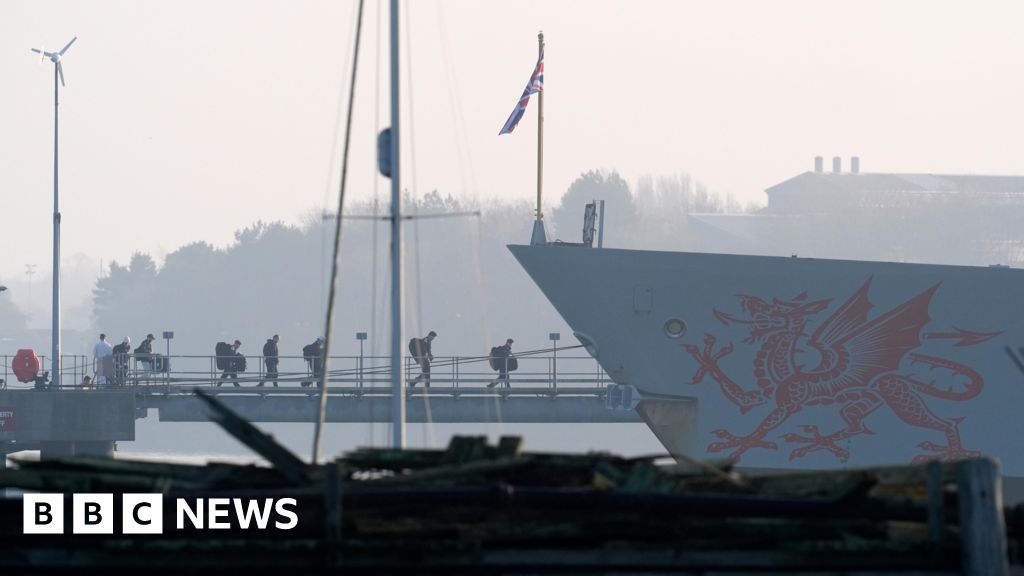
The British Royal Navy is preparing HMS Dragon for deployment to the eastern Mediterranean amid escalating tensions in the Middle East. Currently being loaded with ammunition at Portsmouth, the Type 45 Destroyer had initially been assigned to a different mission before Prime Minister Sir Keir Starmer announced its new role to protect the UK’s military base in Cyprus. Officials indicate that the warship is unlikely to depart until next week, despite recent drone attacks heightening security concerns in the region.
A recent strike by a Shahed-type drone damaged the runway at RAF Akrotiri in Cyprus, though the Ministry of Defence (MoD) described the damage as “minimal.” Western officials have stated the drone was not launched from Iran, but no details regarding its origin have been disclosed. The UK currently lacks a major warship operating in the Mediterranean, leading some to question why a vessel like HMS Dragon was not sent earlier given the growing US military presence and former President Donald Trump’s public threats against Iran.
Government representatives emphasized an increase in defensive capabilities around Cyprus over recent weeks. Treasury minister James Murray noted the buildup of advanced aircraft at regional bases, including F-35s in Cyprus and Typhoons in Qatar, alongside enhanced radar systems. “We’ve been building up F35s at our bases in Cyprus, Typhoons in Qatar, radar capability, all of the defensive capability which is important to enable us to protect British armed forces, British nationals in the region,” he said. Additional support is also on its way, with two Royal Navy Wildcat helicopters equipped with Martlet missiles—designed to counter drone threats—expected to arrive in Cyprus shortly. British military experts are also being deployed to assist allies with air defence strategies.
The MoD highlighted that the Royal Navy currently operates six Type 45 Destroyers, but with half undergoing maintenance and the others at varying levels of readiness. HMS Dragon, staffed by a crew of over 200, is regarded as one of the most advanced air defence warships globally, capable of launching eight missiles within ten seconds. “We are reinforcing our defensive presence in the eastern Mediterranean,” the MoD said. It also stressed the importance of Royal Navy Wildcat helicopters joining existing RAF Typhoons, F-35B jets, ground counter-drone teams, radar systems, and refuelling aircraft already supporting the mission. Continuous jet sorties are underway to counter Iranian strikes threatening UK personnel and assets.
Following the drone strike, Downing Street confirmed that Prime Minister Sir Keir Starmer spoke with the Cypriot president to express “outrage at the drone attack.” Former Royal Navy commander Tom Sharpe critiqued the delayed deployment of HMS Dragon, calling it “too late” and estimating the decision to be about ten days behind what was needed. He pointed out that the threat from Hezbollah and missile attacks was well known, and the military had even conducted exercises in 2013 involving a Type 45 ship at RAF Akrotiri. Sharpe described the Type 45 as a “billion dollar sticking plaster” capable of providing a protective missile defence net but argued that the base required more ground-based air defences and counter-drone technology.
The UK’s role in the escalating conflict has drawn international attention, with Prime Minister Starmer reluctant to engage heavily despite pressure from the US. The British government recently consented to the US military’s use of UK bases for “defensive” strikes against Iranian missile sites, likely involving RAF Fairford and Diego Garcia. However, Starmer emphasized to Parliament that the UK does “not believe in regime change from the skies,” provoking criticism from Donald Trump, who disparaged Starmer as “not Winston Churchill.” So far, US bombers have not conducted any missions from British bases, but officials anticipate their arrival in the coming days.
Meanwhile, diplomatic and humanitarian efforts continue. More than 130,000 Britons have sought assistance for evacuation from the Middle East since hostilities began, with a chartered flight scheduled to depart Muscat International Airport to repatriate some stranded citizens. Additionally, the Iranian ambassador was summoned to the UK Foreign Office, as announced by minister Chris Elmore in Parliament, reflecting heightened diplomatic tensions tied to the unfolding conflict
Read the full article from The BBC here: Read More
Auto Amazon Links: No products found. Blocked by captcha.