Auto Amazon Links: No products found. Blocked by captcha.
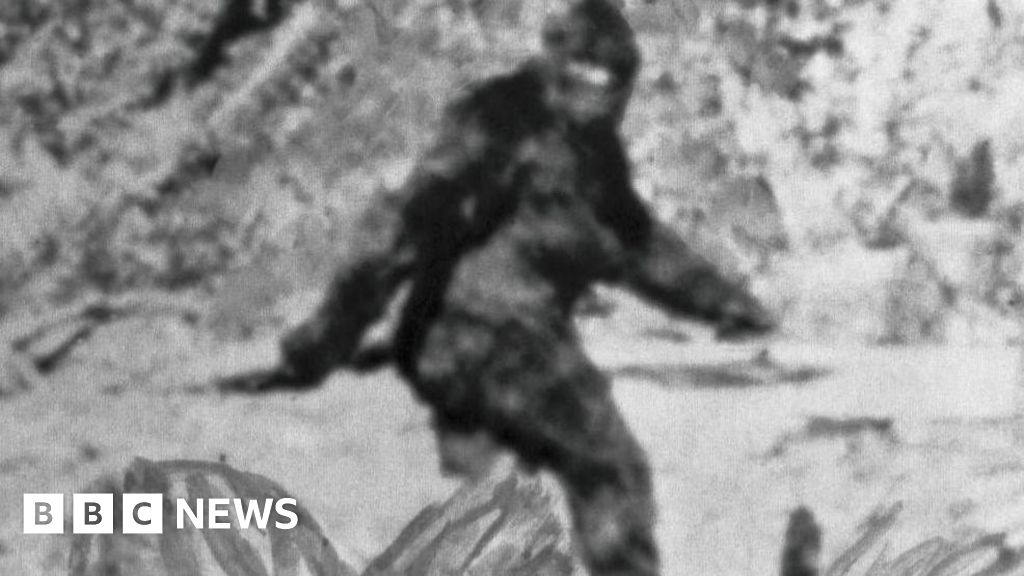
For decades, the legend of Bigfoot has fascinated countless people, whether regarded as a hoax or as evidence of an undiscovered species. This enigmatic figure, often depicted as a large, apelike creature walking upright, has become deeply embedded in cultural imagination. Its rise to prominence began in 1967 with a grainy video filmed in California, showing a seven-foot-tall being glancing back at a camera, an image that has since become iconic.
Despite the widespread interest and numerous reported sightings over the years, definitive proof of Bigfoot’s existence remains elusive. The debate continues unabated, with a range of opinions from experts. For instance, the renowned naturalist Sir David Attenborough has expressed openness to the possibility that mysterious creatures like Bigfoot or the Yeti might be real. Meanwhile, many scientists remain skeptical, withholding judgment until more concrete evidence emerges.
In an effort to delve deeper into the phenomenon, two sociologists conducted extensive research, interviewing over 160 dedicated Bigfoot enthusiasts, often referred to as “Bigfooters.” Their work culminated in a book titled *Bigfooters and Scientific Inquiry,* which offers insights into the motivations and lifestyles of those who fervently pursue evidence of this elusive creature. Dr. Jamie Lewis from Cardiff University, who conducted much of the research alongside Dr. Andrew Bartlett from the University of Sheffield, emphasizes the seriousness with which many of these individuals approach their quest. “Bigfoot exists – at least as a known object that people shape their lives around,” Lewis stated, stressing he would never question their dedication.
Many Bigfoot hunters spend extended periods in North America’s dense forests, sometimes for weeks or even months, employing various tools like drones, infrared cameras, and audio recording devices. They also mimic Bigfoot’s distinctive calls, believing the creature communicates through howls or knocking sounds. The average Bigfooter is often described as a middle-aged white man, many with military backgrounds and blue-collar jobs in rural areas. This group embodies what Lewis calls a “masculine energy” and a “frontier” spirit, driven by the enticing idea that an unknown eight-foot-tall ape could still roam the United States. “A lot of it is kind of an attempt to re-enchant the world, so to speak,” Lewis explained.
Bigfoot’s cultural presence extends beyond mere folklore, appearing in numerous documentaries and even television series such as *The Bionic Woman* from 1976. According to a 2021 survey by YouGov, nearly one in four Americans believes Bigfoot is probably or definitely real. Bigfoot enthusiasts are generally divided into two categories: “Apers,” who believe Bigfoot is a yet-undiscovered primate, and the “Woo-Woos,” who propose more extraordinary theories involving interdimensional travel or extraterrestrial origins. The sociologists focused primarily on the Apers, who tend to reject elitist and establishment views yet are not anti-science.
In their pursuit, Bigfooters have even created specialized DNA testing kits to analyze hair samples and other physical traces they collect. Dr. Bartlett noted that beyond physical evidence, Bigfoot hunters document unexplained phenomena such as anomalous shapes on infrared footage, eerie howls, and compelling eyewitness accounts. These elements help them form hypotheses regarding the creature’s anatomy, behavior, social structure, and intelligence. One dedicated believer, Glenn Adkins from Ohio—a state ranked fourth worldwide for Bigfoot sightings—has been investigating the creature for over 30 years, reflecting the deep commitment that characterizes the Bigfoot community
Read the full article from The BBC here: Read More
Auto Amazon Links: No products found. Blocked by captcha.