Auto Amazon Links: No products found.
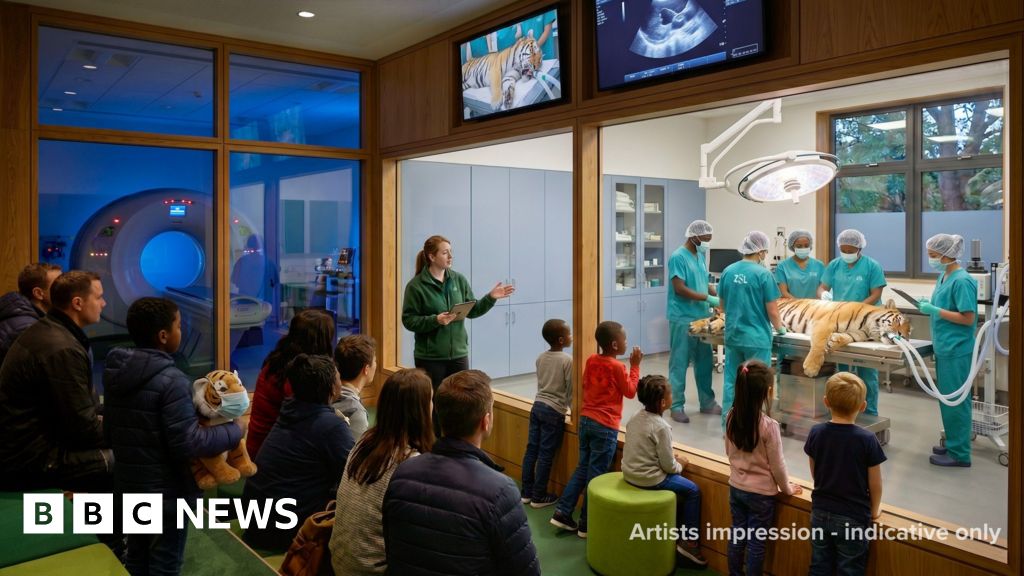
To celebrate its bicentennial, the Zoological Society of London (ZSL) is set to unveil a new wildlife health centre featuring a unique gallery where visitors can observe veterinary care in action. This £20 million facility, located at London Zoo in Regent’s Park, will showcase activities such as penguin health assessments and frog X-rays, allowing the public an unprecedented glimpse into the medical treatment of animals. The project is backed by an anonymous donation, the largest in ZSL’s 200-year existence.
The centre aims to promote veterinary science by offering the UK’s first viewing gallery attached to a veterinary hospital. It will serve multiple purposes, including providing medical care to zoo animals, tracking emerging diseases in wildlife populations, and supporting conservation initiatives like health screenings for hazel dormice prior to their release into the wild. In addition to clinical care, the facility will expand educational opportunities by delivering postgraduate, specialist, and field training for wildlife veterinarians and conservation scientists.
Visitors to the new centre will also witness research and diagnostic work, such as autopsies on porpoises and dolphins that have washed ashore along the coasts of England and Wales. Disease surveillance tasks, like the pre-release health checks on wildlife involved in reintroduction programs, will also be visible. According to ZSL’s head of wildlife health services, Dr Amanda Guthrie, the centre will be a “state-of-the-art facility” with enhanced space and advanced equipment, potentially including a CT scanner and observation areas for post-mortem examinations on stranded marine mammals.
Kathryn England, chief executive of ZSL, reflected on the organisation’s journey over two centuries, noting its evolution from wildlife study to active conservation and advocacy. “For 200 years, ZSL has been committed to growing our understanding of wildlife and taking people on that journey with us,” she said. The new wildlife health centre will continue that tradition by fostering transparency and public engagement in the vital work of safeguarding animal health and preserving biodiversity
Read the full article from The BBC here: Read More
Auto Amazon Links: No products found.