Auto Amazon Links: No products found.
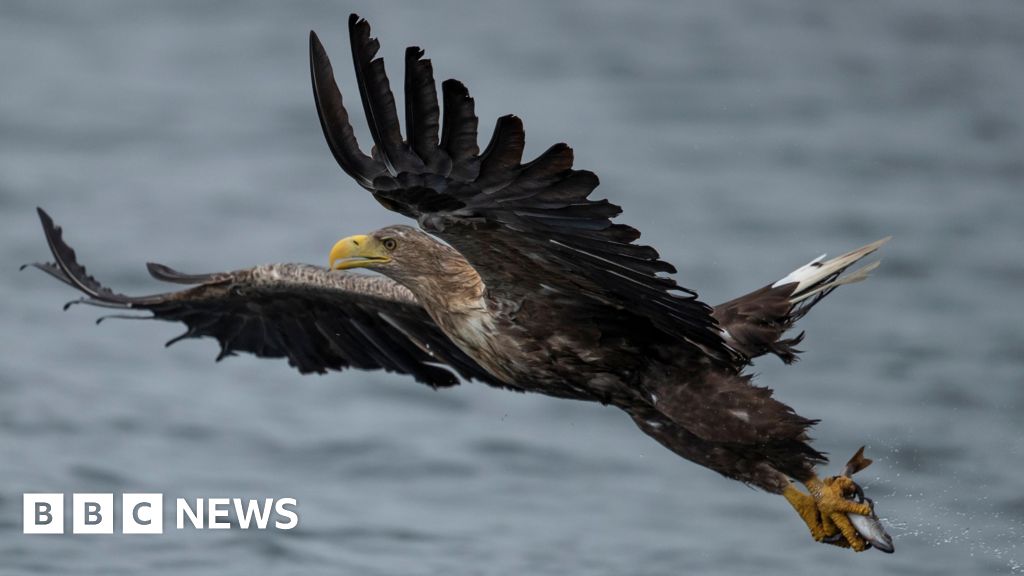
White-tailed eagles, the largest birds of prey in the UK, are set to be released within Exmoor National Park following government approval for the next phase of a contentious nationwide reintroduction initiative. This plan involves releasing up to 20 of these sea eagles—once extinct in the UK—over a three-year period starting this summer. While the species’ comeback is celebrated by some, local farmers have raised concerns about the impact these predators may have on sheep populations.
Farmers, particularly those in Scotland where white-tailed eagles were first reintroduced in 1975, have expressed alarm over potential livestock losses. One Scottish farmer urged residents of Exmoor to resist the reintroduction “tooth and nail,” warning that the birds could lead to significant lamb predation. In response, Natural England, the government agency responsible for wildlife licensing, emphasized that the release would be “carefully planned” in collaboration with local landowners.
Since their initial release on the Isle of Wight seven years ago, white-tailed eagles have naturally spread along southern England’s coastline, and some have already been spotted in Exmoor. To monitor their progress, all of the new birds released in Exmoor will be equipped with satellite tags, enabling the Forestry England and Roy Dennis Wildlife Foundation teams to track their movements. Steve Egerton-Read, project manager for Forestry England’s white-tailed eagle initiative, hopes this will aid in increasing their numbers and facilitate their continued expansion across southern England. Similarly, Ali Hawkins from Exmoor National Park Authority highlighted a commitment to working alongside farmers and stakeholders to help them adapt to the return of these raptors.
Historically, white-tailed eagles were common throughout Britain and Ireland but disappeared by 1918 due to habitat destruction and persecution. The first successful reintroduction efforts began in the Scottish Inner Hebrides in 1975, but not without controversy. Some Scottish farmers report substantial financial losses from lambs taken by the eagles, with one, Ricky Rennie of Argyll, stating he lost two-thirds of his lambs in 2024 alone and up to £30,000 annually. He cautioned Exmoor farmers to oppose the reintroduction efforts vigorously. Meanwhile, industry voices like Andrew Connon of the National Farmers’ Union Scotland stressed the importance of learning from Scottish experiences and ensuring livestock protection is integrated from the start. Disagreements remain over whether the eagles primarily prey on live lambs or scavenge on carcasses, reflecting broader tensions between agricultural communities and conservationists.
The National Sheep Association also voiced concerns about further releases, calling for comprehensive impact assessments that account for farm livelihoods and mental health before allowing more white-tailed eagle introductions. NSA chairman Peter Delbridge, an Exmoor farmer, warned against reaching a point where losses could no longer be managed due to the birds’ protected status. Meanwhile, Natural England pledged to monitor the reintroduction closely, with their national delivery director Matthew Heard emphasizing that the approved licence represents a meticulously planned, evidence-based process developed in cooperation with local communities.
In summary, the white-tailed eagle’s return to Exmoor marks both a significant milestone in UK wildlife restoration and a flashpoint for ongoing debates over balancing conservation with rural economic realities
Read the full article from The BBC here: Read More
Auto Amazon Links: No products found.