Auto Amazon Links: No products found.
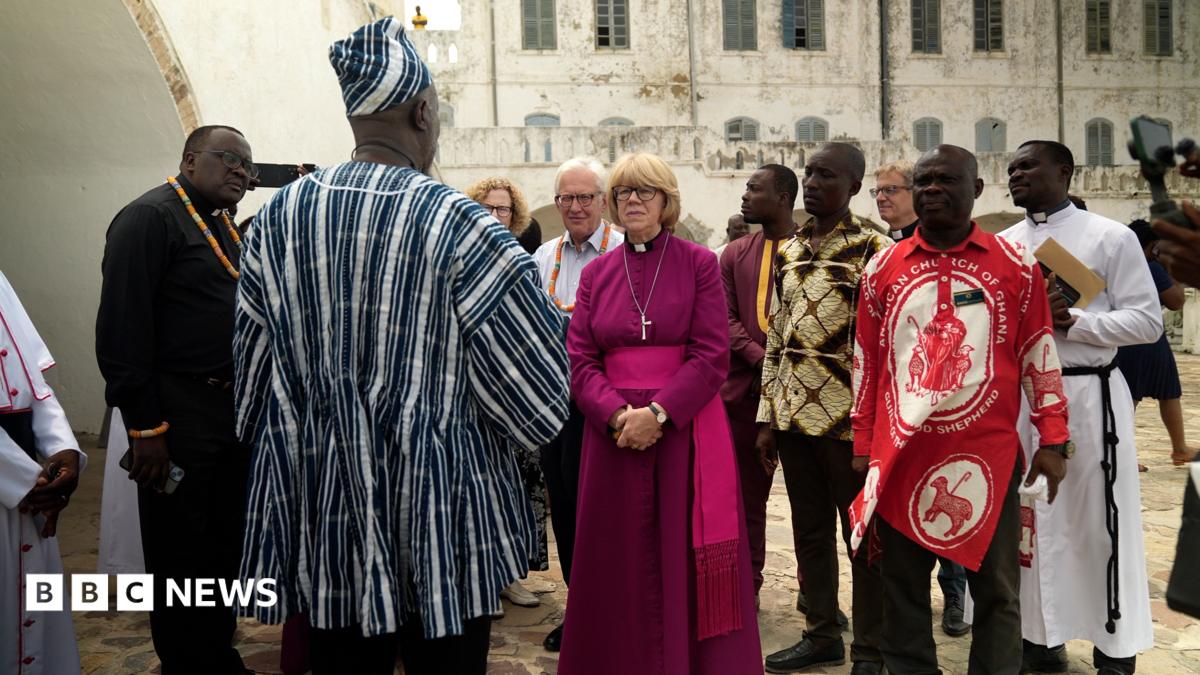
Dame Sarah recently undertook her first pastoral visit to Africa since her installation as the leader of the Church of England at Canterbury Cathedral earlier this year in March. During her time in Ghana, a significant focus of her visit has been on the theme of reparative justice, reflecting on the historical impacts of slavery.
One notable stop on her journey was Cape Coast Castle, a site that came under British control in the 1660s. Here, Dame Sarah was taken to see the dungeons where enslaved people were confined, as well as the “door of no return,” the passage through which they were forced onto ships destined for the transatlantic slave trade. The experience profoundly affected her, highlighting the brutal conditions endured by those enslaved.
Reflecting on the visit, Dame Sarah remarked, “You can’t help but be deeply moved by the horrific conditions that people were kept in and the way that they were treated. It completely throws you off balance and brings home the evil that was transatlantic slavery.” She also pointed out the chapel located above the dungeons, describing it as a “stark illustration of the way the church was involved in the slave trade.”
Historically, the Church of England has acknowledged its complicity in the slave trade and issued apologies for these associations. Evidence shows that the Church’s missionary organization operated plantations worked by enslaved people in the Caribbean to finance the expansion of Anglicanism. Additionally, various members of the clergy owned slaves, and the Church benefited from substantial donations made by slave traders
Read the full article from The BBC here: Read More
Auto Amazon Links: No products found.