Auto Amazon Links: No products found.
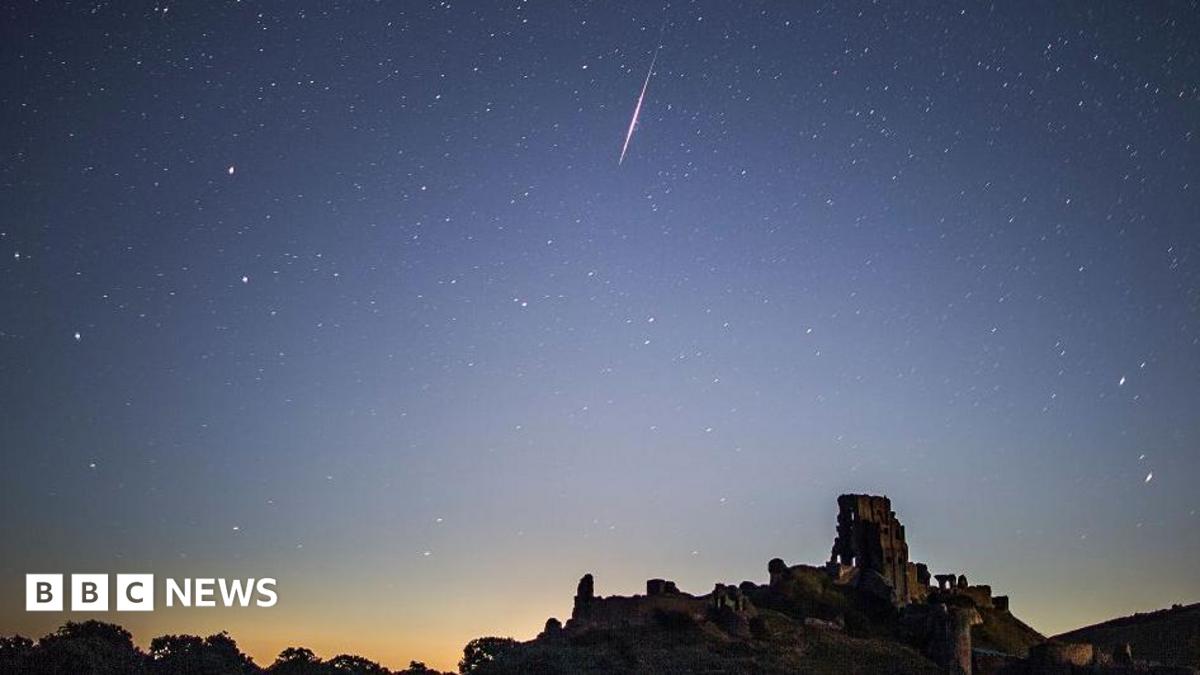
The much-anticipated Perseid meteor shower is once again lighting up the night sky, reaching its peak this Wednesday evening. This year’s event is made even more special as it coincides closely with a partial solar eclipse visible across the UK, offering a rare double feature for skywatchers. Although the two phenomena are unrelated, their near-simultaneous occurrence makes for an extraordinary night dedicated to celestial observation. Astronomer Dr Becky Smethurst described the situation as “the perfect cosmic coincidence of events.”
Meteor showers, such as the Perseids, occur when Earth passes through debris trails left by comets or asteroids. These trails consist of frozen rock and gas that burn upon entering Earth’s atmosphere, creating the bright streaks known as meteors. The Perseid meteor shower specifically originates from debris shed by the Swift-Tuttle comet, a large comet with a nucleus approximately 16 miles (26 km) wide. Since Swift-Tuttle completes its orbit around the Sun once every 133 years, some meteor fragments visible tonight could be more than a century old. Dr Smethurst likens this phenomenon to “the Universe’s own cosmic clock.” The meteors are named after the constellation Perseus, from which they appear to radiate, and can be seen around the globe each year.
The Perseids are active annually from mid-July to late August, but their meteor count is relatively low on most nights. The prime viewing window this year falls between midnight and dawn on the 12th and 13th of August, when observers may see upwards of 100 meteors per hour under optimal conditions. With a new moon occurring simultaneously, the absence of moonlight will maximize visibility by eliminating light pollution naturally. Observers are encouraged to find dark locations away from city lights, allow their eyes about 20 to 30 minutes to adapt, and look toward the broadest possible section of open sky.
Weather conditions will play a crucial role in viewing opportunities. England and Wales are expected to enjoy mostly clear skies with minimal mist, providing excellent conditions for stargazing throughout the night. In contrast, skywatchers in Scotland, Northern Ireland, and the far northern parts of England might encounter more cloud cover and potential rain showers, which could obscure the view. Those in northwest Scotland might do better to catch some rest early, as observing conditions may be poor. The forecast could still evolve, so it is advisable to check local weather updates closer to the date. Meanwhile, for anyone hoping to glimpse a meteor during the partial solar eclipse in the UK, chances remain slim; total eclipses offer better opportunities, and Dr Smethurst notes it would take extraordinary luck to spot a meteor during such an event. It is also important to remember that certified solar glasses are essential for safely viewing the eclipse to prevent eye damage
Read the full article from The BBC here: Read More
Auto Amazon Links: No products found.