Auto Amazon Links: No products found.
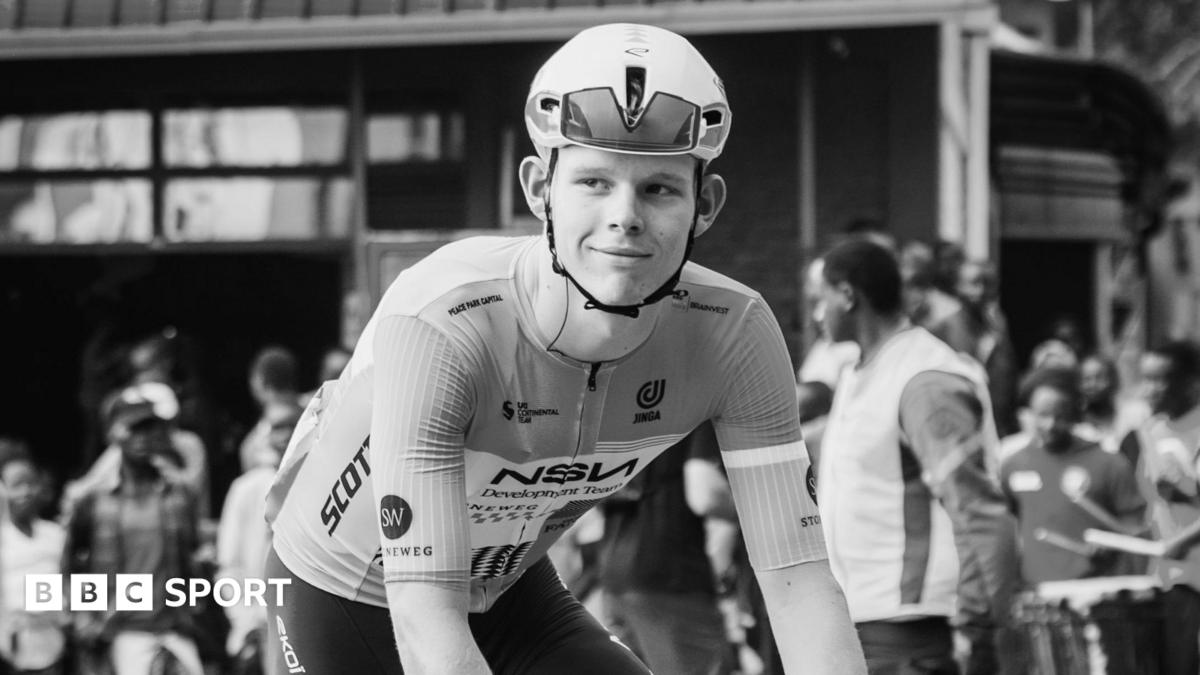
The Cyclistes Professionnels Associes (CPA) have voiced their profound anger following the tragic death of British cyclist Fin Tarling, who passed away during a stage of the Volta a Portugal on Friday. The 19-year-old rider, representing the NSN Cycling team, collided with a vehicle that was not part of the race. Adam Hansen, the CPA president, emphasized the need for improved helmet safety to protect cyclists traveling at increasingly high speeds during competitions. The CPA expressed their grief on social media, stating, “We are speechless and filled with anger” and lamenting that it remains impossible to prevent such devastating accidents despite ongoing efforts. They extended their condolences to Tarling’s family, friends, and teammates, pledging to remember the young athlete.
Fin Tarling was the younger sibling of Josh Tarling, a notable time trial specialist for the British team Netcompany Ineos, who holds achievements including a Giro d’Italia stage win and a European Time Trial championship. Fin himself had recently posted a strong time trial result earlier in the same race, yet he sadly never reached the finish line. He was part of a rising generation of British cyclists, both male and female, who have been inspired by the successes of stars like Mark Cavendish, Chris Froome, and Lizzie Deignan. His dedication to cycling was evident in his daily training routine, and his passion for the sport was widely recognized. Fin’s parents, Michael and Dawn, were deeply involved in his cycling career, frequently attending events and even founding their own team in their home region of Ceredigion, west Wales. Officials are reportedly considering a tribute to Tarling at the upcoming Tour of Britain, which begins on September 2.
Following the incident, Portuguese authorities began investigating the collision between the cyclist and a light goods vehicle. The National Republican Guard in Portugal confirmed the investigation, while local media reports suggest that the driver involved is unlikely to face charges. Cycling poses unique dangers; although it may seem less hazardous than motorsport or boxing, riders can reach speeds up to 60 mph on descents with little protection beyond a helmet. The sport has seen an increase in fatalities as racing speeds have climbed. Unlike in the past, where energy was conserved strategically throughout races, modern cycling is characterized by relentless intensity from start to finish. The recent Tour de France even saw the average speed record broken during stage 11, reaching nearly 32 mph. Over the past three years, six riders have died in road races, including notable tragedies such as the deaths of Muriel Furrer during the 2024 Road World Championships and Gino Mader in the 2023 Tour de Suisse. Tarling’s death is the first recorded road race fatality of 2026, with full details still pending.
Hansen highlighted the urgent need to enhance helmet standards, noting that current regulations do not adequately reflect the speeds encountered in road racing. The helmets used by professional cyclists are tested to the EU standard CE EN 1078, which only covers impacts up to 19.5 km/h, much lower than actual racing velocities. He explained, “Bike helmets only need to meet standard testing like all helmets, EU standard CE EN 1078 is only rated for 19.5km/h and I do not believe this is enough for road racing.” The Union Cycliste Internationale (UCI), cycling’s governing body, was contacted for comment regarding helmet regulations.
Ensuring safety on road courses remains a significant challenge due to the numerous hazards riders face over distances that often exceed 100 miles. While some prominent races, such as the Tour de France, feature fully closed roads on certain stages, many World Tour events employ what are known as ‘rolling roadblocks.’ These involve police and event organizers using vehicles to temporarily close roads at key points, theoretically keeping the route clear until all cyclists have passed through. This system is costly, often requiring over 30 vehicles to maintain. On Friday’s stage, a rolling roadblock was reportedly in use, and Tarling was riding behind the peloton, a situation common for riders who have fallen back or are no longer in the main group. Hansen noted that while the organization is generally strong, the incident “is a bit of a hole in the system.” He explained that drivers unfamiliar with racing sometimes assume the race has completely passed once the lead group is gone, unaware that other riders may still be on the course, sometimes with time gaps of up to 45 minutes.
Incidents involving vehicles during live stages have occurred multiple times in recent years. For example, German cyclist Max Schachmann was struck by a car during Il Lombardia in 2020, and the 2023 Tour Feminin des Pyrenees was cancelled before its final stage after riders refused to compete due to repeated close calls with vehicles on the route. Hansen pointed out that fully closing every road and driveway along a course is logistically difficult and that risk tolerance plays a role in how much protection organizers can provide. He said, “To close every single road and driveway is difficult and it gets to the point how little risk the organisers want to take and if it’s even possible for them to have people at all those points.” This tragic event has once again brought the conversation about cyclist safety and race management to the forefront
Read the full article from The BBC here: Read More
Auto Amazon Links: No products found.