Action on energy costs is my overriding aim, says Fahnbulleh
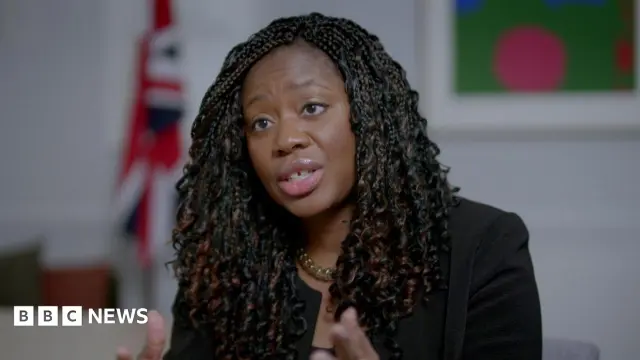
Since Labour assumed power, it has encountered heightened political challenges concerning its climate goals. This pressure has intensified alongside the rise of Reform UK in opinion polls and the Conservative Party, led by Kemi Badenoch, distancing itself from its previous commitment to achieving net zero emissions by 2050. Both opposition parties have particularly criticized public subsidy schemes aimed at promoting renewable electricity generation, arguing that these initiatives have contributed to increased costs for consumers.
Household electricity prices in the UK are among the highest in Europe, a situation influenced not only by subsidies but also by soaring gas prices. The rise in gas costs, a fossil fuel, has been exacerbated by international geopolitical tensions. When questioned in a recent Panorama interview about her primary focus, Labour’s representative Fahnbulleh emphasized affordability amid the cost of living crisis. She stated, “With the cost of living biting, affordability is my overriding objective, without a doubt.” During the same interview, Fahnbulleh maintained that Labour’s drive towards greener electricity forms a key part of ensuring affordability in the long term. She explained that shifting to “homegrown renewables, nuclear” energy sources could reduce dependence on volatile global fossil fuel markets and ultimately lower bills.
Fahnbulleh acknowledged that concerns over energy costs have strained public support for climate initiatives. While some attribute rising costs to net zero policies, she disputed this view, emphasizing that public consent hinges on demonstrating that the transition to cleaner energy will benefit people’s finances. “Part of the way in which we build and maintain public consent is that we’ve got to show that this transition, which we have to do on climate grounds, is good for people’s pockets,” she said.
This summer, the UK experienced an unprecedented number of heatwaves and a series of wildfires, which the Met Office has attributed to climate change, noting the recent fires were 130 times more likely due to global warming. Hosting the UK’s first wildfire summit, Andy Burnham remarked that the recent summer conditions “are likely to be a more regular situation going forward.” Nevertheless, Burnham has pledged to pursue a “cost of living government” and focus on reindustrialising the economy, which has raised speculation in Westminster that climate policies may be deprioritized to lower energy costs in the near term. His administration has drawn criticism from environmental advocates after diverting funds from the energy department to meet defense spending targets, including those previously allocated to energy efficiency programs.
Last month, the government approved drilling at the Jackdaw gas field, a move met with criticism from campaigners, though ministers argue it will reduce reliance on more carbon-intensive fuel imports. The decision regarding production at Rosebank, the largest untapped UK oil field located off Shetland, remains pending. Fahnbulleh reiterated in the Panorama interview that reducing carbon emissions “absolutely is a priority,” highlighting this summer’s droughts as clear signs of the urgent need to address global warming. She also admitted that Labour’s ambition to achieve 95% clean power generation by 2030 is ambitious. Furthermore, recent reports indicate the government is considering relaxing the electric vehicle mandate requiring manufacturers to phase out petrol and diesel cars by 2035. Such a move could hinder the UK’s climate objectives and undermine its leadership role as ministers prepare to attend COP31, the UN’s upcoming climate summit in Turkey
On air now
The Homestretch