UK cannot ‘cherry pick’ EU single market deal, says Barnier
The former lead negotiator for the European Union during Brexit has cautioned that the United Kingdom cannot selectively choose which components of the single market it wishes to rejoin, responding to comments from Andy Burnham about exploring closer economic relations with Europe. The UK prime minister has indicated that re-entering the EU’s internal market is among potential strategies to redefine the country’s relationship with the bloc since its departure nearly six years ago.
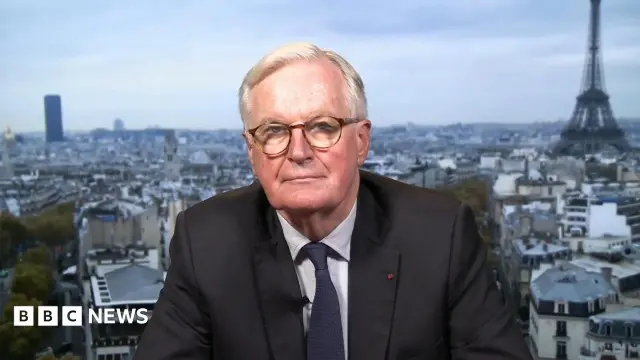
In an interview with the BBC’s Sunday with Laura Kuenssberg, Michel Barnier emphasized that access to the single market demands adherence to all its core principles, including the free movement of people. He stated clearly that there is no “single market à la carte” option allowing the UK to pick only favorable parts. Barnier, who headed the EU’s Brexit negotiation team from 2016 to 2021 and briefly served as French prime minister in 2024, noted that the door remains open for the UK to rejoin the EU as a full member. However, he insisted that any return to the single market would require the UK to accept all existing conditions, such as regulatory frameworks facilitating the smooth trade of goods, services, capital, and people—collectively known as the “four freedoms.”
Since taking office in July, Burnham has indicated that Labour could back a much closer future association with the EU, including a possible bid to rejoin the union. Nonetheless, he has ruled out implementing significant policy shifts before the next general election. Previous administrations have negotiated multiple agreements with the EU outlining the future UK-EU relationship post-Brexit. Both sides are expected to use an upcoming summit in Brussels, scheduled in 10 days’ time, to announce agreements related to food standards, youth visas, and reconnecting UK industries to the EU’s carbon trading system.
Among the four freedoms, the movement of people—allowing EU citizens to live and work across the bloc without visa restrictions—was a contentious issue during the 2016 referendum. Burnham’s predecessor, Sir Keir Starmer, excluded reinstating free movement from Labour’s 2024 manifesto, marking it as a divisive topic set to distinguish Labour from the Conservatives and Reform UK in future elections. Burnham recently clarified that he would not support reintroducing free movement without a referendum, and Downing Street reiterated that he currently does not advocate its return. He has expressed intent to present “different options” on UK-EU relations during the Brussels summit, aiming to build public consensus on the matter.
Barnier also dismissed the possibility of reviving the UK’s financial rebate to the EU budget, a discount first negotiated in 1985 that reduced the UK’s contributions while it was a member. He described the UK’s departure as creating “a new situation,” making a refund “off the table.” Additionally, Barnier drew parallels between Nigel Farage, leader of Reform UK, and French politician Marine Le Pen, describing both as sharing “the same populism, the same lies, the same false promises.” He cited the infamous claim from the Vote Leave campaign that the UK sent £350 million each week to the EU, a figure later criticized for ignoring the UK rebate and EU funding returned to the UK.
Boris Johnson, a leading figure in the Vote Leave campaign, defended the £350 million figure as based on the UK’s gross contribution, arguing it was actually an underestimate. In his 2024 memoirs, Johnson stated that EU funds spent in the UK lacked democratic oversight by British citizens and insisted the net amount—estimated at £175 million per week—still represented a considerable sum. Farage, who led Leave UK but was not part of Vote Leave or associated with the £350 million claim, dismissed Barnier’s remarks as arrogant and out of touch, asserting that Barnier’s comments reinforce the decision to leave the EU
On air now
Juicebox