Scientist killed in Spain rail crash was ‘a light for all of us’
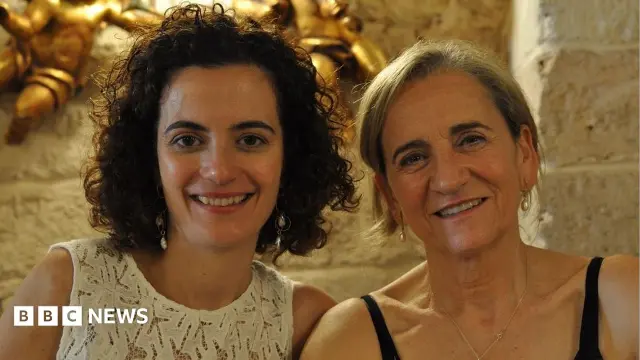
The aunt of Dr. Marta Shahbazi, a scientist from the University of Cambridge who lost her life in the tragic Spanish rail accident, shared a heartfelt tribute, describing her niece as “a light for all of us.” Dr. Shahbazi was traveling on 28 October to Andalusia to receive an award recognizing her scientific excellence when the train she was on collided with another near Urda, south of Madrid, resulting in 69 fatalities.
Dr. Shahbazi’s funeral took place in Madrid on Monday, where hundreds of friends and colleagues gathered to honor her memory. María José Alonso, her aunt, remarked to the BBC on the overwhelming support from across the globe, emphasizing Marta’s warmth and vibrant spirit. “She was the friendliest person you can imagine, with lots of energy,” Alonso said. “She was a light for all of us.” Marta, 41, had been named the recipient of an award from the Spanish Society for Developmental Biology for her work on early human development and was scheduled to accept the award at a scientific conference in El Rompido, Andalusia.
Alonso revealed that Shahbazi had originally planned to travel to the event by car with her family but ultimately chose to take the train alone. “Her family was here in Madrid, and they could have gone together by car – but she said ‘no, stay here’,” Alonso explained. In her professional career, Shahbazi served as an affiliate associate professor leading a research group at the MRC Laboratory of Molecular Biology (LMB), located on the biomedical campus in Cambridge.
Reflecting on her niece’s early passion for science, Alonso, a professor at the University of Santiago de Compostela, recalled how Marta would eagerly practice conference presentations with her from a young age. “When she was seven or eight years old, I remember her telling me, ‘Auntie, rehearse with me, I want to change the slides for you, I want to listen to you’,” she said. Marta showed remarkable determination and a deep interest in life sciences from early on.
The train crash was caused when a Renfe-operated high-speed train collided into the rear of a stationary train run by the Iryo company. This incident is one of the deadliest rail disasters in recent European history and marks the deadliest in Spain since 2013. The two trains carried more than 540 passengers in total. The MRC Laboratory of Molecular Biology issued a statement mourning the loss of “an inspiring, talented and passionate scientist,” calling her death a “profound shock and a huge loss.” They also highlighted Shahbazi as a role model who proudly described herself as a “mother scientist.” Prof. Bertie Gottgens from the University of Cambridge’s Stem Cell Institute, where Shahbazi was a principal investigator, added that the scientific community was “shocked and deeply saddened” by her passing
On air now
The Homestretch