Roman village found under Flintshire housing estate in Mancot
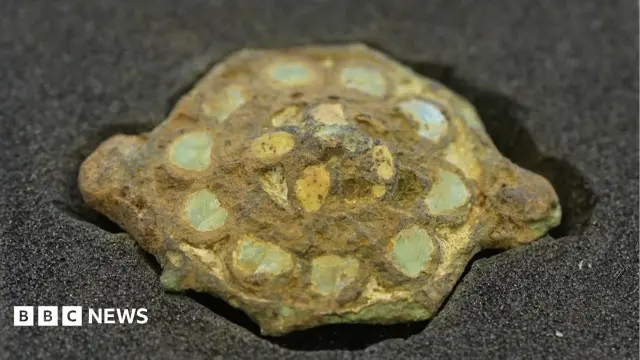
A remarkable Roman settlement, believed to be nearly 2,000 years old, has been uncovered beneath a recently constructed housing estate in Mancot, Flintshire. This significant archaeological site includes a jewellery workshop, which is thought to have produced brooches and other decorative items for Roman society. The discovery was made by Heneb, the trust responsible for Welsh archaeology, during routine mining surveys connected to the new development. It has been described as one of the largest collections of Roman artefacts ever found in the county.
Among the artefacts recovered are several brooches and moulds, which are currently undergoing conservation work. These items will be analysed in detail at the National Museum of Wales in Cardiff before being displayed in north-east Wales. Chris Matthews, the project manager overseeing the excavation, expressed the excitement surrounding the find, noting that it offers new insights into the region’s ancient history. Despite homes now occupying the site on Gladstone Way, archaeologists were able to retrieve numerous objects, including coins and pottery, and map the extent of the Roman settlement extending under the village.
Matthews highlighted that prior to this discovery, very little Roman archaeological evidence had been found in north-east Wales, even though the area overlooks the historically important Roman city of Chester. This gap had led to speculation that the Romans had limited interaction with the indigenous population. However, recent findings across the region, including in places like Greenfield and Rossett, are challenging this view. The Mancot site may have origins dating back to the Iron Age, preceding the Roman occupation, and shows signs of continuous habitation over a long period, supported by coins from the reigns of Emperors Commodus and Constantine.
The jewellery workshop uncovered at Mancot provides evidence of local industry that utilized abundant metal resources to craft essential goods for Roman society. Lead moulds found on-site indicate that a diverse range of brooches were produced, items that were both functional for fastening garments and highly decorative, often featuring animal motifs. Alongside this, pottery fragments suggest trade networks extending as far as mainland Europe. Experts in Cardiff will study the brooches to learn about their manufacturing techniques and metal origins. Plans are underway for these objects to be displayed publicly at Flintshire Museums Service, with the hope of eventually uniting Roman discoveries from across north-east Wales. Sophie Fish, museums manager at Gwella, expressed enthusiasm for showcasing the brooches at Mold Museum as early as 2027, calling them a rare glimpse into life two millennia ago
On air now
In The Mix